Industry Trends
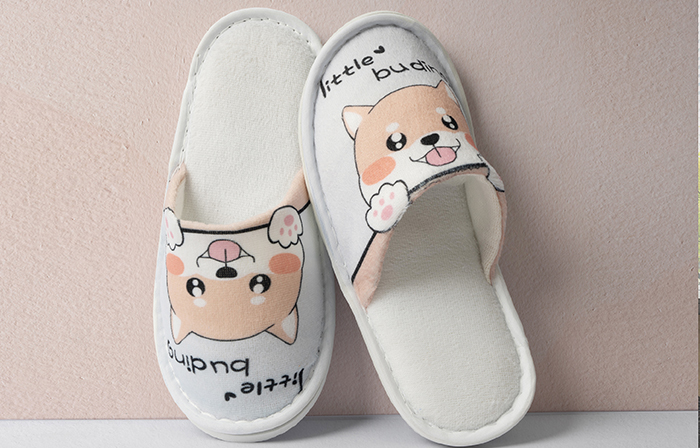
The production process of disposable slippers in hotels is a complex and delicate process involving multiple links, from the selection of raw materials to the packaging of finished products, each step requires strict quality control and technical support. The following is the detailed production process of disposable slippers for hotels:
1. Raw material preparation
The production of disposable slippers first requires the selection of suitable raw materials. Common raw materials include non-woven fabric, EVA (ethylene vinyl acetate copolymer), PVC (polyvinyl chloride), etc. Non woven fabric is usually used for shoe uppers, while EVA or PVC is used for shoe soles. These materials need to have characteristics such as lightness, softness, wear resistance, and slip resistance to meet the needs of hotel customers.
-Non woven fabric: Non woven fabric is a type of fabric that does not require spinning and weaving, and has characteristics such as breathability, environmental friendliness, and softness. During production, non-woven fabric needs to be cut according to the design size of the slippers.
-EVA or PVC: EVA material is lightweight, soft, and has good elasticity and anti slip properties, often used to make shoe soles. PVC material has good wear resistance and weather resistance, making it suitable for making shoe soles with strong durability.
2. Design and sampling
Before production, designers will design the style of slippers based on market demand and hotel requirements. After the design is completed, sampling will be carried out, that is, making samples. The purpose of sampling is to verify the feasibility and comfort of the design, ensuring that the finished product meets expectations.
-Design: Designers will design disposable slippers in different styles based on factors such as the hotel's positioning, customer base, and season. When designing, it is necessary to consider the pattern and color of the shoe upper, the thickness of the sole, and the anti slip performance.
-Sampling: During the sampling process, the production department will make samples based on the design drawings, and conduct trial fitting and testing to ensure comfort and functionality.
3. Cutting and Forming
After confirming that the sample is correct, enter the formal production stage. The first step is the cutting process, which involves cutting the non-woven fabric and EVA/PVC material according to the design dimensions.
-Cutting: Use a cutting machine to cut non-woven fabric and EVA/PVC materials into the shape of the shoe upper and sole. When cutting, it is necessary to ensure precise size to avoid wasting materials.
-Molding: The cut material needs to undergo molding treatment. The upper of the shoe is usually fixed with non-woven fabric through hot pressing or ultrasonic welding technology, while the sole is molded through mold pressing or injection molding.
4. Stitching and assembly
The formed upper and sole need to be sewn and assembled. This step is usually carried out using automated equipment to ensure production efficiency and consistency.
-Stitching: The upper and sole of the shoe are sewn together using a sewing machine or ultrasonic welding technology. When suturing, it is necessary to ensure that the stitches are evenly distributed to avoid detachment or loosening.
-Assembly: After stitching, assemble the shoe upper and sole to form a complete slipper. During the assembly process, it is necessary to check the quality of each step to ensure that the finished product is defect free.
5. Quality inspection
After production is completed, all slippers need to undergo strict quality inspection. The testing items include size, weight, comfort, anti-skid performance, etc.
-Size inspection: Use measuring tools to check whether the size of the slippers meets the design requirements, ensuring that the size of each pair of slippers is consistent.
-Weight testing: Check if the weight of the slippers meets the standard to ensure they are lightweight and comfortable.
-Comfort testing: Testing the comfort of slippers by trying them on to ensure that the sole is soft and the upper is breathable.
-Anti slip performance testing: Test the anti slip performance of slippers on simulated wet ground to ensure safety.
6. Packaging and Storage
Slippers that have passed quality inspection will enter the packaging process. The packaging usually uses plastic bags or paper boxes, and the hotel logo or related information will be printed on the packaging.
-Packaging: Use automated packaging equipment to pack slippers into plastic bags or paper boxes and seal them. When packaging, it is necessary to ensure that the number of slippers in each packaging bag or box is consistent.
-Storage: After packaging is completed, the slippers will be stored in a dry and ventilated warehouse, waiting for shipment. When storing, it is necessary to avoid direct sunlight and humid environments to prevent material aging or deformation.
7. Shipping and Logistics
The packaged slippers will be sent to various hotels through the logistics system. During the logistics process, it is necessary to ensure transportation safety and avoid damage to slippers during transportation.
-Delivery: According to the hotel's requirements, the slippers will be shipped in batches. When shipping, it is necessary to verify the quantity to ensure accuracy.
-Logistics: Choose a reliable logistics company for transportation to ensure that slippers can be safely and promptly delivered to the hotel.
8. Environmental Protection and Sustainability
With the increasing awareness of environmental protection, the production of disposable slippers in hotels is also paying more attention to environmental protection and sustainability. Many manufacturers have started using biodegradable or recycled materials to make slippers in order to reduce their impact on the environment.
-Degradable materials: Use biodegradable non-woven fabric and EVA materials to ensure that slippers can naturally degrade after use, reducing environmental pollution.
-Recycling: During the production process, try to recycle and reuse scraps and waste materials as much as possible to reduce resource waste.
Summary
The production process of disposable slippers in hotels requires meticulous operation and strict quality control at every step, from the selection of raw materials to the packaging of finished products. Through the use of modern production equipment and environmentally friendly materials, not only has production efficiency been improved, but the impact on the environment has also been reduced. With the continuous advancement of technology, the production of disposable slippers in hotels will become more efficient and environmentally friendly, meeting the needs of hotels and customers.
Stay updated, join our mailing list and get 10% off your first order of $100.

 +86 189 9843 1185
 chloe@sanhootel.com+86 189 9849 2275simon@sanhootel.com
 Room 309, Building 11, No.728, Shibei Industrial Road, Panyu District, Guangzhou 511430, China