Industry Trends
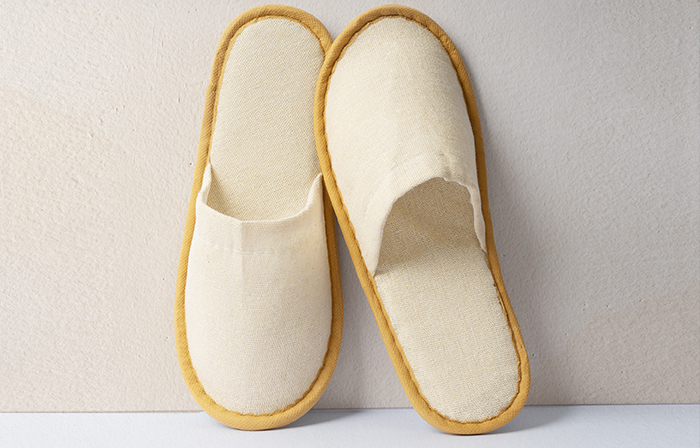
The anti slip performance of disposable slippers in hotels is one of the important indicators for measuring their quality and safety. With the increasing frequency of people's travel, the use of disposable slippers in hotels has become increasingly widespread, especially in places such as hotels, guesthouses, and resorts. The anti slip performance of slippers directly affects the comfort and safety of users. Therefore, understanding the anti slip performance and influencing factors of disposable slippers in hotels is of great significance for improving user experience and reducing safety hazards.
1、 The importance of anti slip performance of disposable slippers in hotels
1. Ensure user safety
The anti slip performance of disposable slippers in hotels is directly related to the safety of users during use. Especially in wet and slippery environments such as bathrooms and toilets, slippers with poor anti slip performance can easily cause users to slip and cause physical injury. For special groups such as the elderly and children, anti slip performance is particularly important.
2. Improve user experience
Slippers with good anti slip performance can provide users with a more stable wearing experience, especially when walking or standing, reducing discomfort caused by sliding. Good anti slip performance can also enhance users' trust and satisfaction with hotel services.
3. Reduce hotel operational risks
If the anti slip performance of disposable slippers in hotels is insufficient, it may cause users to slip and get injured, leading to complaints or legal disputes. This not only affects the hotel's brand image, but may also increase operating costs. Therefore, choosing slippers with good anti slip performance is one of the important measures for hotels to reduce operational risks.
2、 Factors affecting the anti slip performance of disposable slippers in hotels
1. Sole material
The sole material is one of the key factors determining the slip resistance of slippers. Common shoe sole materials include EVA (ethylene vinyl acetate copolymer), PVC (polyvinyl chloride), TPR (thermoplastic rubber), etc. Among them, TPR material soles usually have good anti slip performance because their surface texture and softness can better fit the ground and increase friction.
2. Sole design
The design of the sole also has a significant impact on the anti slip performance. For example, the texture design of the sole surface (such as wave patterns, particle patterns, concave convex patterns, etc.) can increase the contact area with the ground, thereby improving the anti slip performance. In addition, the thickness and softness of the sole can also affect the anti slip effect, and overly thick or hard soles may reduce the anti slip performance.
3. Operating environment
The anti slip performance of disposable slippers in hotels may vary in different usage environments. For example, on dry ground, slippers may have better anti slip performance; But on wet and slippery surfaces, the anti slip performance may significantly decrease. Therefore, hotels need to choose suitable slippers based on the actual usage environment.
4. User usage habits
The user's usage habits can also affect the slip resistance of slippers. For example, prolonged wear or improper use may lead to shoe sole wear, thereby reducing slip resistance. In addition, the user's body weight and walking style can also have a certain impact on the anti slip performance.
3、 How to improve the anti slip performance of disposable slippers in hotels
1. Choose high-quality materials
Hotels should prioritize the material and design of the sole when choosing disposable slippers. For example, choose a TPR material sole and ensure that the sole surface has a reasonable texture design to increase friction.
2. Strengthen quality inspection
When purchasing disposable slippers, hotels should conduct strict testing on their anti slip performance. It can be tested by simulating actual usage environments (such as slippery floors) to ensure that slippers can maintain good anti slip performance under different conditions.
3. Provide instructions for use
The hotel can provide instructions for using slippers in the room to remind users to pay attention to anti slip issues. For example, it is recommended that users use slippers with caution in slippery environments or provide additional anti slip pads and other auxiliary tools.
4. Regularly replace slippers
Hotels should regularly replace disposable slippers to avoid wear and tear on the soles of the shoes caused by prolonged use, thereby reducing their anti slip performance. In addition, hotels can adjust the selection of slippers in a timely manner based on user feedback to meet the needs of different users.
4、 Test method for anti-skid performance of disposable slippers in hotels
1. Friction coefficient test
The friction coefficient is one of the important indicators for measuring the anti-skid performance of slippers. Professional friction coefficient testers can be used to simulate friction forces under different ground conditions, in order to evaluate the slip resistance performance of slippers.
2. Wet and slippery environment testing
The wet and slippery environment is one of the main challenges to the slip resistance of slippers. The anti-skid performance of slippers can be evaluated by conducting actual wearing tests on wet and slippery surfaces, observing the walking stability of users under different conditions.
3. Collection of User Feedback
Hotels can understand the actual usage effect of slippers through user feedback. For example, adding an option about the slip resistance of slippers in the check-in survey form, collecting user opinions and suggestions to further improve the product.
5、 The future development trend of anti-skid performance of disposable slippers in hotels
1. Intelligent design
With the development of technology, smart design slippers may emerge in the future. For example, sensors can be embedded in the sole of the shoe to monitor the user's walking status in real time and remind them to pay attention to anti slip through vibration or sound.
2. Application of environmentally friendly materials
While improving anti slip performance, disposable slippers in hotels in the future may use more environmentally friendly materials. For example, using biodegradable TPR materials can ensure slip resistance while reducing environmental impact.
3. Personalized customization
In the future, hotels may provide personalized customized slippers according to users' needs. For example, designing slippers with different anti slip properties for users of different age groups or weight ranges to enhance the user experience.
VI. Summary
The anti slip performance of disposable slippers in hotels is an important factor affecting user safety and experience. By selecting high-quality materials, optimizing sole design, strengthening quality testing, and providing usage instructions, hotels can effectively improve the slip resistance of slippers and reduce safety hazards. In the future, with the development of technology and the enhancement of environmental awareness, the anti slip performance of disposable slippers in hotels will develop towards intelligence, environmental protection, and personalization, providing users with a safer and more comfortable wearing experience.
Stay updated, join our mailing list and get 10% off your first order of $100.

 +86 189 9843 1185
 chloe@sanhootel.com+86 189 9849 2275simon@sanhootel.com
 Room 309, Building 11, No.728, Shibei Industrial Road, Panyu District, Guangzhou 511430, China